Moving Tips
Long Distance Moving Company Near Me: Red Flags to Avoid
Long distance moving company near me? Learn the top red flags to avoid scams, hidden fees, and delays, plus quick checks to book a reliable mover.

Moving Tips
Long distance moving company near me? Learn the top red flags to avoid scams, hidden fees, and delays, plus quick checks to book a reliable mover.
When you search “long distance moving company near me”, you are usually not looking for the cheapest option. You are looking for the safest option that will actually show up, protect your items, and deliver on time without surprise charges.
Long-distance moves also create more opportunities for bad actors: brokers that disappear after taking a deposit, “too-good-to-be-true” quotes, and worst of all, shipments held hostage until you pay more.
This guide covers the most common red flags to avoid, how to verify a mover quickly, and what “green flags” look like so you can book with confidence.
With local moves, you can sometimes cut your losses quickly if something feels off. With long-distance moving, your belongings may travel hundreds or thousands of miles, pass through terminals, and involve more paperwork, more handling, and more scheduling complexity.
That complexity is exactly why reputable companies insist on clear inventories, written estimates, and a signed bill of lading. It is also why scammers try to rush you into paying before you fully understand what you are signing.
If your move crosses state lines, the mover is regulated federally by the FMCSA (Federal Motor Carrier Safety Administration), and you can (and should) verify their credentials on official databases like FMCSA’s consumer resources.
Below are the warning signs that most often lead to surprise costs, delays, or disputes.
A very low estimate often means one of two things:
The company is not basing the price on a real inventory, so the cost will “adjust” on moving day.
The quote is bait, and you will be hit with add-on charges once your items are loaded.
A realistic long-distance quote is built from weight or volume, distance, access conditions (stairs, long carry), and services (packing, storage, specialty items). If the estimator does not ask detailed questions, the quote is not reliable.
A quick phone quote is not automatically a scam, but if the company refuses to do any walkthrough (video or in-person) and does not request an itemized inventory, treat that as a risk.
Long-distance pricing depends heavily on what you are actually moving. Reputable movers usually want to confirm:
Large furniture pieces
Number of rooms or approximate inventory
Specialty items (pianos, safes, artwork)
Packing needs
Pickup and delivery access
If the company skips this, you are more likely to face price changes later.

Be cautious if you are asked for a large deposit before any real paperwork exists, or if you are pressured with “today only” pricing.
For interstate moves, FMCSA rules also protect consumers in important ways. For example, under the 110% rule on non-binding estimates, the mover generally cannot require you to pay more than 110% of the estimate at delivery (the remainder is billed later), which helps reduce last-minute price shocks. You can read more through FMCSA’s “Protect Your Move” guidance.
If a mover is handling an interstate household goods move, they should have a USDOT number (and usually an MC number). A common scam is listing someone else’s number or using a fake one.
What to do:
Ask for their USDOT and MC numbers.
Verify the company name and status on official FMCSA resources, starting with Protect Your Move.
Some businesses are brokers, not carriers. A broker can be legitimate, but you should know exactly who will physically handle your move.
Red flags include:
The company name on the quote differs from the company name on reviews or emails.
They cannot tell you which carrier is assigned.
You are passed between multiple phone numbers with no clear point of contact.
Ask directly: “Are you the carrier or the broker, and who will transport my shipment?” Get the answer in writing.
A trustworthy moving company should have a real business presence and clear ways to reach them.
Be cautious if:
The address is a mailbox store or cannot be verified
The website has no licensing details
The trucks show up unmarked
For interstate moves, you should expect formal paperwork. Refusal is a major red flag.
At minimum, you should receive documents such as:
A written estimate (binding or non-binding)
An order for service
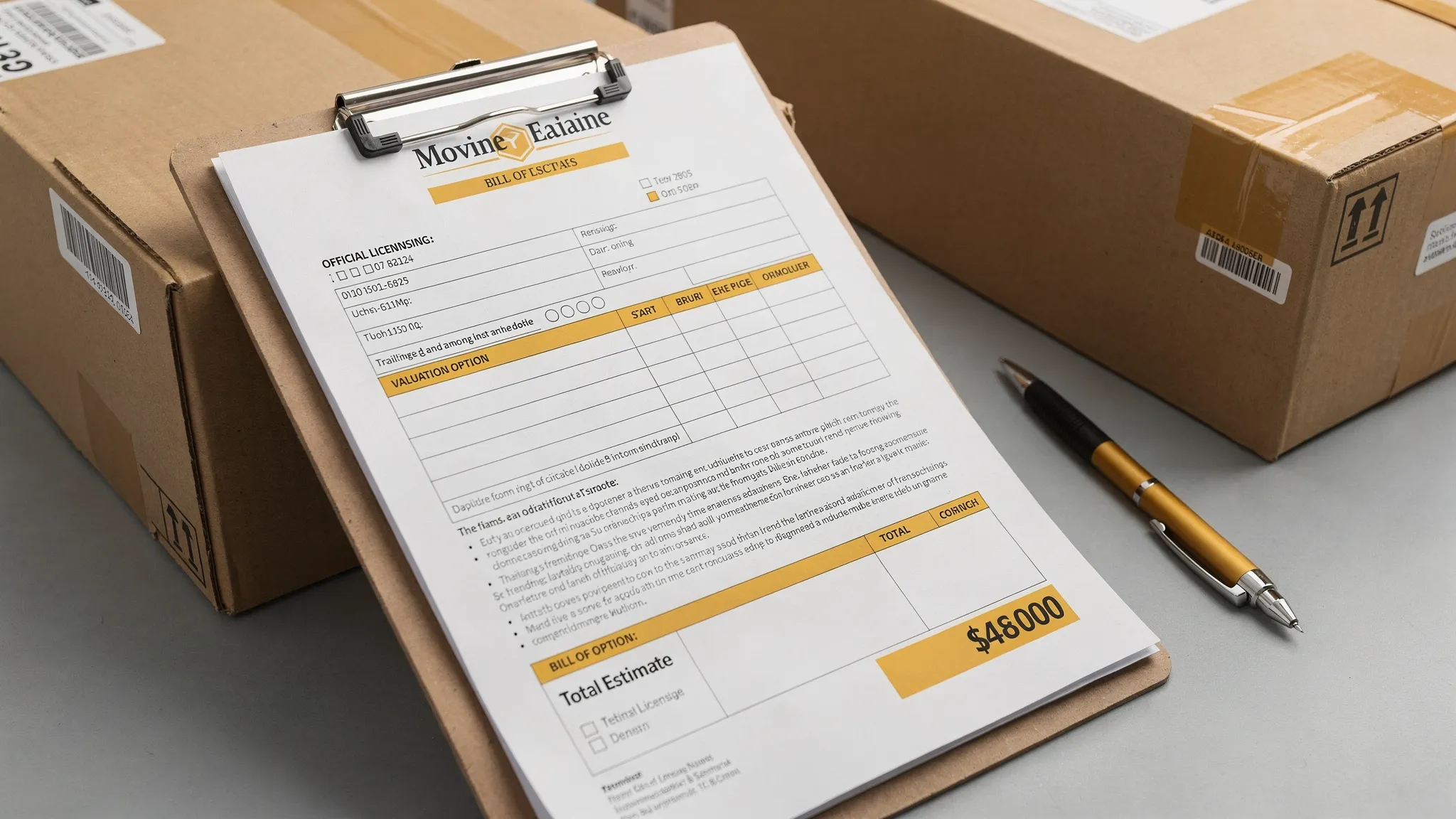
A bill of lading (contract for the shipment)
Valuation options disclosure (your protection choices)
If the mover wants you to rely on texts or verbal promises only, walk away.
This is one of the most serious warning signs.
If a company suggests they can hold your belongings until you pay extra, or if they frequently mention “storage fees” and “redelivery fees” without clearly defining them, that is a risk indicator. FMCSA provides consumer guidance for disputes and complaints through Protect Your Move.
Many customers hear “insured” and assume it means full replacement coverage. Moving protection is often handled as valuation coverage, and the level of protection can vary.
A reputable mover should clearly explain:
Your valuation options
What is covered and what is excluded
How claims work and the time window to report issues
If they dodge these questions, that is a problem.
Even great companies get occasional negative reviews. What matters is a recognizable pattern, for example:
“Final price doubled after loading”
“Late delivery with no updates”
“Could not reach anyone after deposit”
Look for consistency across platforms and read the most recent reviews, not just the overall star rating.
Use this table as a quick screen before you book.
Red flag | Why it matters | What to do next |
|---|---|---|
Very low estimate compared to others | Often bait pricing, missing inventory, or hidden fees | Request an itemized inventory and a written estimate type (binding vs non-binding) |
No walkthrough or inventory | Pricing is likely to change later | Require a virtual or in-home survey |
Large deposit pressure | Higher risk of bait-and-switch or disappearing broker | Pay only with traceable methods and only after paperwork is clear |
No USDOT/MC (interstate) | Possible illegal operator | Verify on FMCSA resources like Protect Your Move |
Company identity changes | Broker/carrier confusion, accountability gaps | Get the actual carrier name and numbers in writing |
Refuses written documents | Hard to enforce anything later | Only book with written estimate + bill of lading |
Vague valuation coverage | You may be under-protected | Ask for valuation options in writing |
Poor communication before booking | Usually worse during transit | Choose a mover with a single point of contact and clear update process |
You do not need to be an expert to do a basic legitimacy check. The goal is to confirm the mover is real, accountable, and appropriately licensed for your move type.
Interstate (crossing state lines): FMCSA rules apply.
Intrastate within California: state rules apply (licensing and permits differ).
If you are unsure, ask the mover to state in writing which regulatory authority applies to your move.
Start with FMCSA’s official consumer portal: Protect Your Move. It explains common scam patterns, your rights, and what documentation you should receive.
Ask these questions and expect clear, calm answers:
What valuation options do you offer?
How do you document pre-existing damage?
How do I submit a claim if something is damaged or missing?
Long-distance moves often go wrong when the scope is unclear. Before you sign, confirm the quote clearly states:
Packing services included (or excluded)
Stairs, elevators, long-carry assumptions
Disassembly and reassembly expectations
Specialty items (each listed)
Storage and redelivery terms, if applicable
If you are comparing multiple estimates, you may also find it helpful to review Zapt Movers’ guide on getting no-obligation moving quotes in 5 minutes so you are comparing apples to apples.
Red flags help you avoid disasters. Green flags help you choose confidently.
A strong long-distance mover typically:
Provides upfront, transparent pricing and explains what can change the cost
Offers a walkthrough (virtual or in-person) before finalizing the estimate
Gives you clear paperwork and encourages you to read it
Explains valuation options in plain English
Communicates delivery windows and update expectations
If you want a broader framework beyond long-distance moves, Zapt Movers also has a solid general guide on finding reliable movers near you.
If you are relocating for a new role, especially on a tight start date, you need more than a truck. You need a mover that can commit to timing, communication, and documentation.
It is also smart to align your move timeline with the hiring and onboarding process. Some professionals coordinate relocation details with the employer or recruiter early, especially for senior roles. If you are in that situation, an international recruiter such as Optima Search Europe can be part of the broader transition planning (start dates, relocation windows, and expectations), while your moving company focuses on safe transport and delivery.
How do I know if a long-distance moving company is legitimate? Start by confirming the company is properly licensed for your move type, provides a written estimate, and can explain valuation coverage and claims. For interstate moves, use FMCSA’s Protect Your Move resources.
Is it normal for long-distance movers to change the price on moving day? It can happen if your inventory or conditions differ from what was quoted (more items, stairs, long carries, packing added). Big surprises are often a sign the original quote was not based on a real inventory.
What is the biggest red flag when hiring long-distance movers? A dramatically low quote combined with pressure to pay quickly is one of the most common setups for bait-and-switch pricing.
Do I need a binding estimate for a long-distance move? Not always, but you should understand whether your estimate is binding or non-binding, and what can cause additional charges. If the mover cannot explain it clearly, that is a red flag.
What should I do if a mover threatens to hold my items unless I pay more? Treat it seriously, document everything, and refer to FMCSA consumer guidance (interstate). You can also file complaints through official channels listed on Protect Your Move.
If you are comparing options for a long distance moving company near me in California, Zapt Movers offers professional long-distance moving, packing, specialty item handling, and secure storage, with upfront honest pricing and a licensed and insured team.
Get started by visiting Zapt Movers to request a free quote and talk through your timeline and inventory with a real moving coordinator.